phoneFREE CASE EVALUATION (866) 999-9085

 About Adam Peck

Adam J. Peck, ESQ is a principal with Peck Law Group, APC. In 2008, Mr. Adam Peck received his Juris Doctorate from Whittier Law School where he graduated Cum Laude. His practice is primarily dedicated to representing Elders, Dependent Adults, along with their loved ones and family members, who have suffered horrific personal injuries.

Sepsis leading to Septic Shock

Sepsis is the leading cause of death in critical care patients

Sepsis leading to septic shock is a serious and often deadly illness, yet it remains an unfamiliar threat to most of the general public, as well as one of the most difficult diseases for doctors to diagnose and treat.

“The condition, which begins with an aggressive immune system reaction to an infection kills 18 million people around the world every year, including around 260,000 in the U.S. By many estimates, sepsis—and its most severe form, septic shock—is the leading cause of death for intensive care patients, and elders and dependent adults in the U.S. and the 10th most common cause of death for everyone else in the country” says Steven Peck, Esq.

Yet only one in five Americans recognizes the term, according to a 2011 study commissioned by the nonprofit group Sepsis Alliance, and of those survey participants who had heard of sepsis, most could not define it.

Even physicians, who learn about sepsis in medical school, often miss its early signs because they mimic other disorders and because the illness progresses so rapidly from what looks like a mild infection to a life-threatening situation.

As a result of these difficulties, doctors are often late to launch the necessary interventions, such as antibiotics to obliterate the infection, drugs to counteract a perilous drop in blood pressure, and a mechanical ventilator to raise dangerously low oxygen levels.

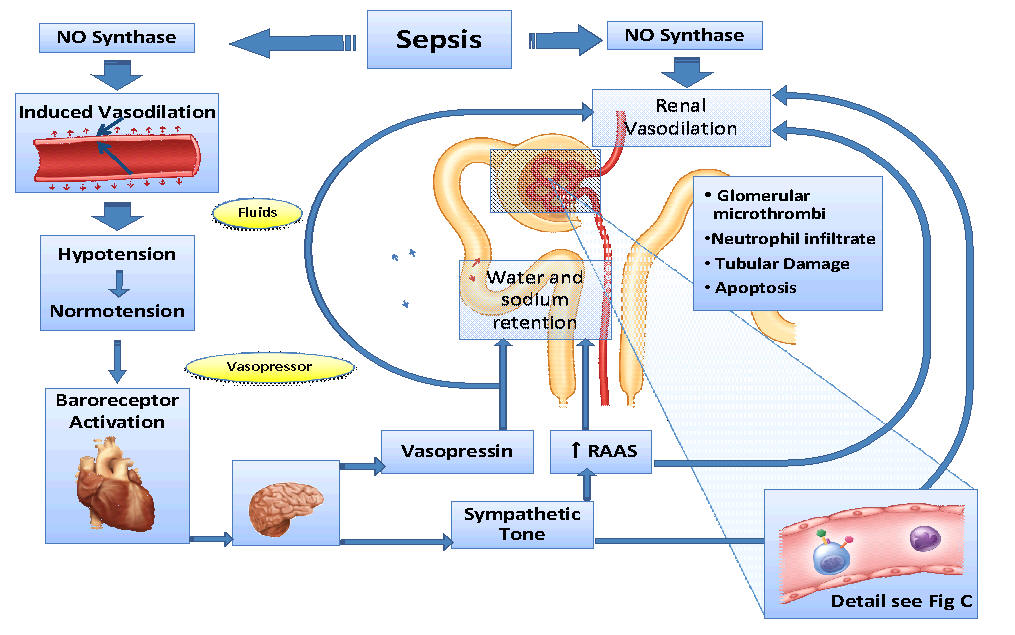
Sepsis begins innocuously enough when the immune system performs its usual task of recognizing invading bacteria, viruses or fungi. Immune cells release signaling proteins called cytokines to stimulate one another and overcome the invaders—but for poorly understood reasons, the immune cells release far more cytokines and other inflammatory molecules than is typical.

All the extra immune molecules surging through the bloodstream have the inadvertent effect of making blood vessels slack and permeable, reducing blood pressure and allowing the fluid component of the blood to seep into surrounding tissues. The blood components left behind clot in the smallest vessels, preventing oxygen from reaching major organs.

At this point, someone with sepsis has transitioned from the earliest stage of the disease, known as systemic inflammatory response syndrome, to the later stages of severe sepsis and septic shock. Confusion sets in, the heart’s electrical activity becomes erratic, the kidneys and other organs fail, and blood pressure cannot be raised even with large amounts of intravenous fluids and drugs.


The Son of Brooke Astor Shall go to Prison For Defrauding His Mother Says Elder Abuse Lawyer Steven Peck

The son of late New York philanthropist and socialite Brooke Astor will go to prison for defrauding his mother after a state appeals court upheld his conviction.

Anthony Marshall, 88, was convicted in October 2009 of grand larceny and other charges for changing his mother’s will while she was incompetent. He was sentenced to one to three years in jail for acts including giving himself a $1 million raise for managing his mother’s money. Astor died in 2007 at 105.

Marshall in February 2010 filed motions to vacate his conviction, claiming juror misconduct. New York state Supreme Court Justice A. Kirke Bartley Jr. upheld the conviction of Marshall and his co-defendant, lawyer Francis X. Morrissey, in July 2010 and Marshall appealed.

The Appellate Division’s First Department affirmed the conviction in a decision released today, saying the verdicts were “based on legally sufficient evidence and are not against the weight of the evidence.”

“The record amply supports the jury’s determination that defendants are guilty of a scheme to defraud Mrs. Astor by fraudulently changing her will via the codicils at a time when they knew her physical and mental condition precluded her from having the capacity to agree to any such changes,” the appeals panel said in a unanimous decision.

Larceny Count

Marshall had also asked the appeals court to throw out the first-degree grand larceny count, which carries a mandatory prison term, arguing that his age, health, military service, public service, lack of prior criminal history and the non- violent nature of his criminal conduct warrant dismissal.

The appellate panel declined, saying the state legislature has provided a way for terminally ill people to be released from prison on medical parole. It also disagreed with Marshall’s argument that the “substantial restitution” paid to resolve a dispute over Astor’s will is a “compelling factor.”

“We are not convinced that as an aged felon Marshall should be categorically immune from incarceration and it is generally inappropriate to use the interest of justice as a device for granting dispensations from mandatory sentencing statutes,” the appeals court said. “Further, Marshall’s age, along with the medical conditions presented, do not establish, based on the record before us, that incarceration will likely cause his death.”

Further Proceedings

The appeals court did throw out one of five counts of second-degree grand larceny against Marshall, saying that having a secretary employed by Astor do tasks for a theater production company he was operating out of her apartment didn’t constitute that crime.

Marshall, who had been free pending the appeal, was ordered to return to New York state Supreme Court in Manhattan for further proceedings. The Manhattan District Attorney’s Office didn’t immediately respond to a request for comment on the decision.

“We are of course deeply disappointed in the decision, and we are exploring all of Mr. Marshall’s options,” his attorney, John R. Cuti with Cuti Hecker Wang LLP in New York, said in an e-mail.

The case is People v. Marshall, 06044-2007, New York Supreme Court, New York County (Manhattan).

The PECK LAW GROUP specializes in personal injury matters relating to Serious and Catastrophic Injury, Nursing Home Abuse and Neglect, Bed Sores, Decubitus Ulcers, and Pressure Sores, Medical Malpractice, Surgery Errors, Traumatic Brain Injury, Birth Injury and Wrongful Death that are determined to be a breach of the standard of care.  Our experts and our attorneys have superior knowledge and know how in handling these type of matters from inception to Trial if need be.  You will receive superior representation and of course the best possible result based upon our know how and expertise.

Call us Now.  THE PECK LAW GROUP In Southern California at (818) 908-0509; In Northern California at (925) 808-5708; or all across the United States toll free at (866) 999-9085

To contact the reporter on this story: Chris Dolmetsch in New York State Supreme Court at  8969 or cdolmetsch@bloomberg.net


Kansas State has Created A New Program Related to Traumatic Brain Injury says California Personal Injury Lawyer Steven Peck

Kansas State Research and Extension has created a new program about brain injuries that is two-pronged: one portion includes resources for people with traumatic brain injuries and a second helps people gain a better understanding about injuries that affect more than a million people each year, and up to 20 percent of military personnel returning from combat deployment.

Some injuries are mild — a bump on the head that causes some temporary symptoms; others are severe enough to cause partial or significant loss of function in many areas. Survivors of brain injuries say attitude of the public is one of their biggest challenges.

The professional community describes success in terms of the person being able to return to work. But the work may be different, Eubank explained, citing one of three case studies followed in the program, in which a former pilot instructor now serves his community as a volunteer firefighter.

The individual may be different than before the injury and they need to be accepted for the person they are now. A western Kansas homemaker described how her friends sent her a card saying “hope you get better” soon after her car accident; then she never heard from them again.

“People tend to shy away,” she said. “We’re not contagious.”

Some have no visible signs of their injuries. Symptoms of a mild injury include:

• headache that does not go away

• trouble remembering, paying attention or concentrating, organizing daily tasks or making decisions and solving problems

• slowness in thinking, speaking, acting or reading

• getting lost or easily confused

• feeling tired all the time, lacking energy or motivation

• change in sleep pattern

• loss of balance

• increased sensitivity to sounds, lights, distractions

• blurred vision or eyes that tire easily

• loss of sense of taste or smell

• ringing in the ears

• change in sexual drive

• mood changes

Groups most vulnerable to brain injuries include infants and children up to age 4, adolescents and older adults.

Program materials include information about managing concussion in high school athletes, and the importance of keeping a teen out of play to give the brain time to heal and avoid a second, more severe incident.

The PECK LAW GROUP specializes in personal injury matters relating to Serious and Catastrophic Injury, Nursing Home Abuse and Neglect, Bed Sores, Decubitus Ulcers, and Pressure Sores, Medical Malpractice, Surgery Errors, Traumatic Brain Injury, Birth Injury and Wrongful Death that are determined to be a breach of the standard of care.  Our experts and our attorneys have superior knowledge and know how in handling these type of matters from inception to Trial if need be.  You will receive superior representation and of course the best possible result based upon our know how and expertise.

Call us Now.  THE PECK LAW GROUP In Southern California at (818) 908-0509; In Northern California at (925) 808-5708; or all across the United States toll free at (866) 999-9085