phoneFREE CASE EVALUATION (866) 999-9085

 About Adam Peck

Adam J. Peck, ESQ is a principal with Peck Law Group, APC. In 2008, Mr. Adam Peck received his Juris Doctorate from Whittier Law School where he graduated Cum Laude. His practice is primarily dedicated to representing Elders, Dependent Adults, along with their loved ones and family members, who have suffered horrific personal injuries.

Coronavirus-Related Deaths in California Nursing Homes

Nursing Home Deaths in California Due to Covid-19 Corona Virus

Earlier this week, the state of California reported that nearly 40% of the coronavirus-related deaths had happened at assisted living facilities and skilled nursing facilities. As of April 25, 2020 there were 144 confirmed deaths that occurred in assisted living facilities. As of April 28, there was a total of 578 nursing home resident deaths. There have also been 11 healthcare workers who have died after they contracted the virus in a nursing home setting.

Accuracy Concerns Regarding the Current Available California Data

The state has denied a request for identification of where the deaths occurred. It is also believed that the newly released data is not necessarily complete, based on a Los Angeles Times analysis. It appears that the data was missing multiple facilities that have known outbreaks, and that facilities with six or fewer beds were not included in the data.

Another concern with the accuracy of this data is that it only includes known deaths by the facilities. This means that it may not include the deaths that occurred after a resident was transferred over to a hospital, or a private home, or other location.

Current Measures Being Taken to Help Reduce Coronavirus-Related Fatalities

State and local officials have announced that new measures will be taken to tackle the increasing fatality rate. These measures include incorporating more aggressive regulations and seeking help from the California National Guard. The California National Guard will be going inside nursing homes to boost staffing levels.

Other plans include the expansion of testing for both symptomatic and asymptomatic staff and residents, a visitor ban, suspended communal dining, and personal protective equipment to be required to be worn by all residents and staff. These additional measures are designed to get a better idea of how many people in nursing homes have actually contracted the virus, and also to limit access to outsiders who may already be carrying the virus.

Nursing Home Inspections Currently Halted and the Potential Drawbacks

Inspection Glass for California Nursing Homes During Covid-19 Virus

Last month, The Centers for Medicare and Medicaid Services announced that it was going to temporarily halt regular inspections to more than 15,300 nursing home facilities in order to put the primary focus on the current threat posed by the novel coronavirus. Routine inspections were put into place to help protect nursing home residents from dangerous conditions.

Nursing Home Facilities are Given the Authority to Temporarily Perform Their Own Inspections

Currently, facilities are authorized to perform their own inspections; however, based on the past track records at many nursing homes, this may put the already isolated and vulnerable nursing home residents at a greater risk. During the last two rounds of inspections, nearly 60% of the nursing homes were issued citations for failures in infection control. Breaches of this nature can lead to residents contracting the flu, pneumonia, and the coronavirus.

The Centers for Medicare and Medicaid Services has said it will conduct targeted surveys of homes with residents who are fighting the virus in order to look for infection control threats and to respond to residents that may be in immediate danger. Individual states, which share oversight duties with the federal government, will also follow suit.

Nursing Home Residents May Suffer Due to the Halting of Formal Inspections

One of the main concerns revealed during the last round of inspections was that caretakers had not taken the necessary precautions to isolate residents during outbreaks of influenza. Other concerns included the failure to properly clean medical equipment, use protective masks, and the lack of using gloves while treating vulnerable patients.

It was also noted during inspections that nursing home residents were found to be suffering from severely infected wounds, nursing staff was found to have provided inadequate care by giving the residents the wrong medications, and it was also found that residents were routinely left alone without anyone on duty to care for them. Additionally, more than seven out of ten nursing homes were operating with staffing levels that were below the federal recommendations. These unacceptably low staffing levels are one of the leading causes of neglect and abuse in nursing home facilities.

Problems Already Resulting from the Lack of Formal Nursing Home Inspections

Records show that the decision to grant nursing home facilities the authority to perform their own inspections has already led to a drastic reduction in oversight. In fact, inspectors visited nearly 100 homes during the time period of March 23 through April 10 and found that nearly one in five of these nursing homes were not properly using personal protective equipment (PPE) such as masks or gloves. During this same approximate period of time last year in 2019, inspectors carried out 925 routine surveys and found more than 6,000 violations for a variety of problems, including incorrect prescriptions, bedsores, and instances of patients with cognitive impairments leaving the facilities unauthorized.

According to a California health care expert, routine nursing home inspections are critical to detecting hazards and, subsequently, saving lives. The current order halting these inspections will likely have some negative consequences for nursing home residents and their loved ones.

CMS Guidance for Nursing Homes During the COVID-19 Virus

Covid-19 Virus in California Nursing Homes

The Centers for Medicare and Medicaid Services (CMS) has recently issued some rules and guidelines for nursing homes to enact during the Covid-19 virus. Below, you will find a guide to these new rules and guidelines.

Social Distancing

During this time, CMS has prohibited all communal activities and meals in nursing home facilities. Only essential healthcare workers and government surveyors are currently allowed to have access to these facilities. Given the risk that healthcare providers may face when seeing residences in multiple nursing homes, the term essential is to be construed narrowly.

Whenever possible, instead of having physicians visit each nursing home, physician visits may be conducted via telehealth. Visitation of the nursing home residences should be limited only to compassionate situations—meaning end of life visitation and other visits under similar conditions.

Limited Visitation

When approved visitors visit the residents, they must be limited to that resident’s room, or another designated area. The visitor is required to wear Personal Protective Equipment (such as face masks) and should be practicing hand hygiene (washing and sanitizing hands). The visitors should be discouraged from hugging or engaging in physical contact with the residents.

Approved visitors who are able to visit during “compassionate situation” visitations include family and friends, along with other non-essential persons, such as ombudsman program representatives. If someone is experiencing respiratory infection symptoms, they will not be allowed to visit.

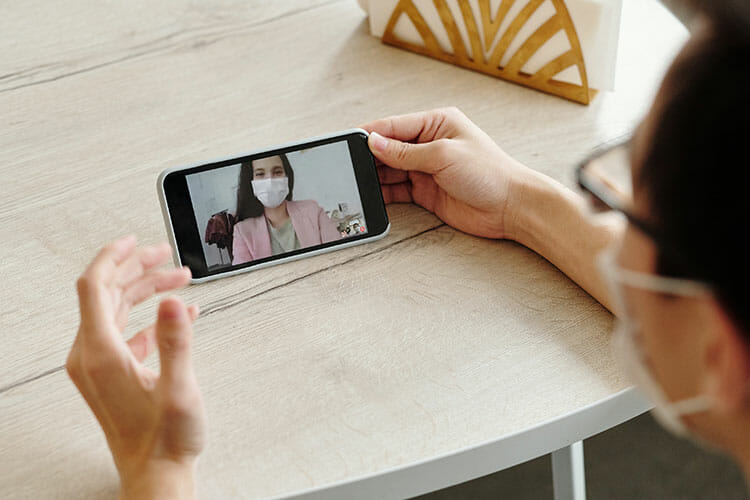
Nursing homes may also be able to arrange virtual visits with the residents by allowing family and friends to connect with the residents through a video chat or phone call, or even through a window. CMS is encouraging nursing home facilities to allow residents to make phone calls and use other forms of remote communications during this time.

Other Facility Operations Changes

At this time, nurse aide training requirements are waived, aside from the requirement that nurse aides are to be competent. During this emergency, a nursing home facility is not required to comply with the deadlines for submitting resident assessment or staffing levels data to CMS.

Admissions from Hospitals

Medicare payment standards are currently loosened. Currently, a three-night hospital stay is no longer required as a prerequisite for Medicare coverage of nursing home care. However, CMS still requires that there be a finding that either:

  • The resident needs focused nursing care on a daily basis; or,
  • At least five days a week of skilled therapy services.

A nursing home facility can admit a resident who has COVID-19, as long as they are able to follow CDC guidelines for Transmission-Based Precautions. Regarding regular admissions, nursing home facilities can conduct business as usual, admitting individuals to the facility as they normally would, including individuals from hospitals where a case of COVID-19 was or is present. States have enacted their own policies on these issues, and CMS has not formally taken a position on the various state policies. CMS officials have noted informally that they are inclined to defer to states on these types of issues.

Moving Nursing Facility Residents Based on Diagnosis

CMS allows for nursing facility residents to be moved without advance notice to a different facility, in three different scenarios:

  • A resident without symptoms of a respiratory infection or a diagnosis of such is being transferred to a facility which is dedicated to the care of such residents;
  • A resident with COVID-19 or any respiratory infection symptoms is being transferred to a facility which is dedicated to the care of such residents;
  • A resident without any symptoms of a respiratory infection is being transferred to another facility in order to complete a 14-day observation.

However, the new facility must be asked and agree in advance to accept the resident. For the sole purpose of separating COVID-negative and COVID-positive nursing facility residents, CMS has currently waived regulatory rights to:

  • Receive notice before a transfer within the facility;
  • Refuse certain transfers within a facility; and,
  • Room sharing with the consent of both persons.

Survey Activities

Survey activities are limited to the following, under CMS’s survey prioritization:

  • Initial certification surveys;
  • Surveys for immediate jeopardy situations; and,
  • Targeted infection control surveys which are conducted along with the Centers for Disease Control and Prevention (CDC).

Additionally, facilities are to have an infection control checklist for self-assessment. Due to practical realities, along with CMS guidance, surveyors face additional limitations. If a surveyor is unable to obtain Personal Protective Equipment, they cannot perform an on-site survey.

Also, enforcement remedies are not to be imposed during this emergency period, with the exception of remedies that arise from immediate jeopardy situations. Unless a complaint has been triaged as immediate jeopardy, the complaint will be logged into the system, but there will be no other action taken for the time being. CMS will issue further guidance on these complaints as a long-term solution.

Tips for Administrative Advocacy

Advocates must push the states and CMS to not lose sight of the needs of individual residents. It is better to think of this time as a modification of the regulations, rather than just a pure waiver of them, so that the appropriate resident protections are able to be maintained. If a waiver is issued, then state or federal guidance should fill the holes wherever the waiver has left a vacuum.